
By Martin O’Meowey | The Canton Cat
ANNAPOLIS — Gov. Wes Moore launched a new TV ad touting Maryland’s ban on dynamic grocery pricing, promising shoppers that stores should not be able to quietly charge different people different prices for the same goods. The law takes effect Oct. 1.
Canton Cat immediately applauded.
Then asked the obvious follow-up:
“Great. When are we banning dynamic governing?”
Because Marylanders have apparently had enough of systems that change depending on who’s standing in front of them.
At the grocery store, that means:
Same eggs. Same store. Same day. Different price.
At the State House, it means:
Same governor. Same issue. Different audience. Different answer.
Moore’s campaign calls dynamic pricing unfair.
Canton Cat agrees.
So I have drafted the companion legislation:
THE PROTECTION FROM PREDATORY POLITICS ACT
Under the bill, elected officials would be prohibited from dynamically adjusting their positions based on:
- whether they’re speaking to progressives,
- whether they’re speaking to moderates,
- whether there’s a camera nearby,
- whether New Hampshire is involved,
- or whether Maryland can somehow slap a tax, fee, surcharge, assessment, study commission or “temporary revenue enhancement” on the thing first.
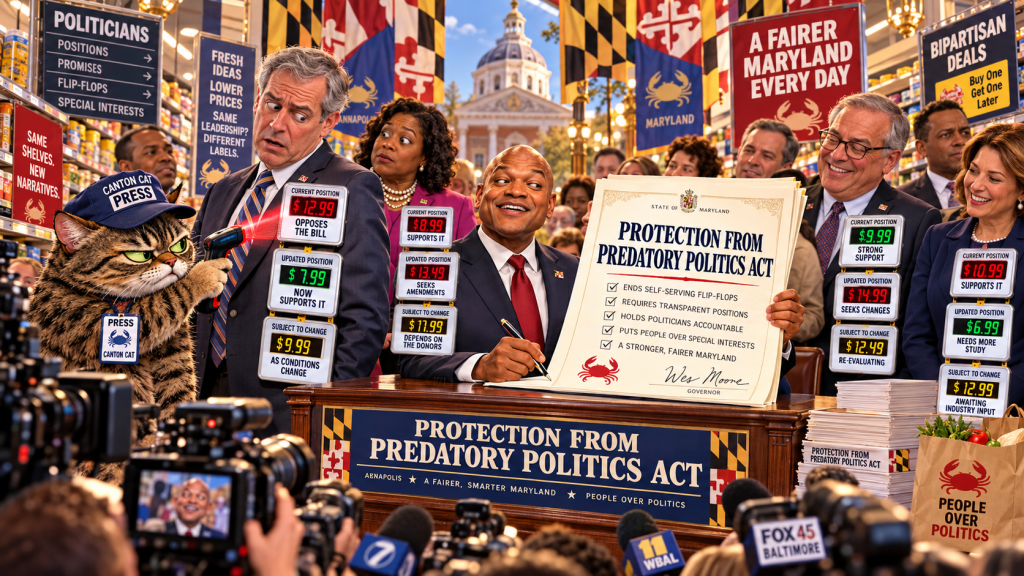
The first violation results in a warning.
The second requires the politician to wear a grocery-store shelf tag showing his current position.
The third automatically changes the tag to:
MARKET PRICE — ASK AGAIN AFTER POLLING.
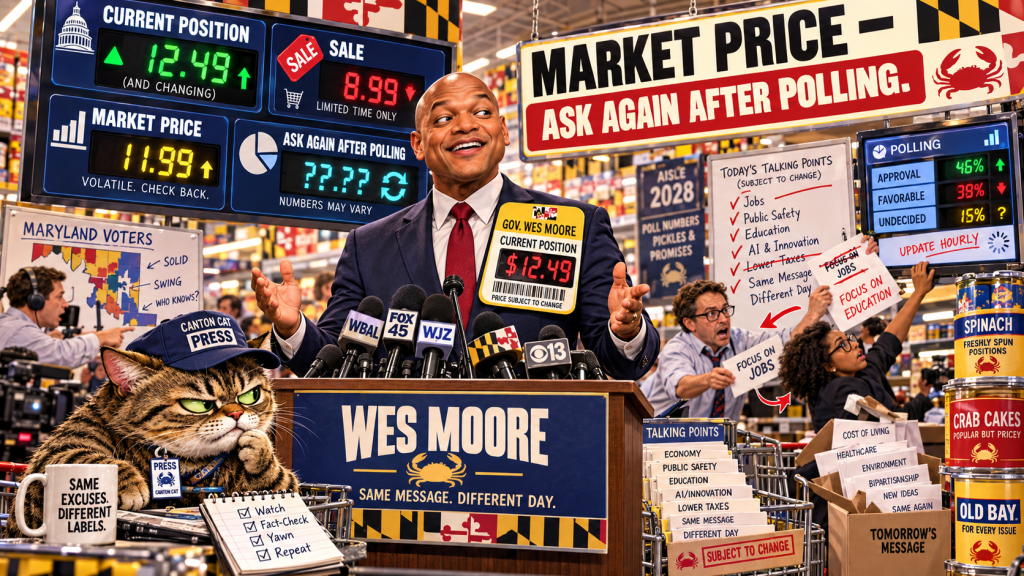
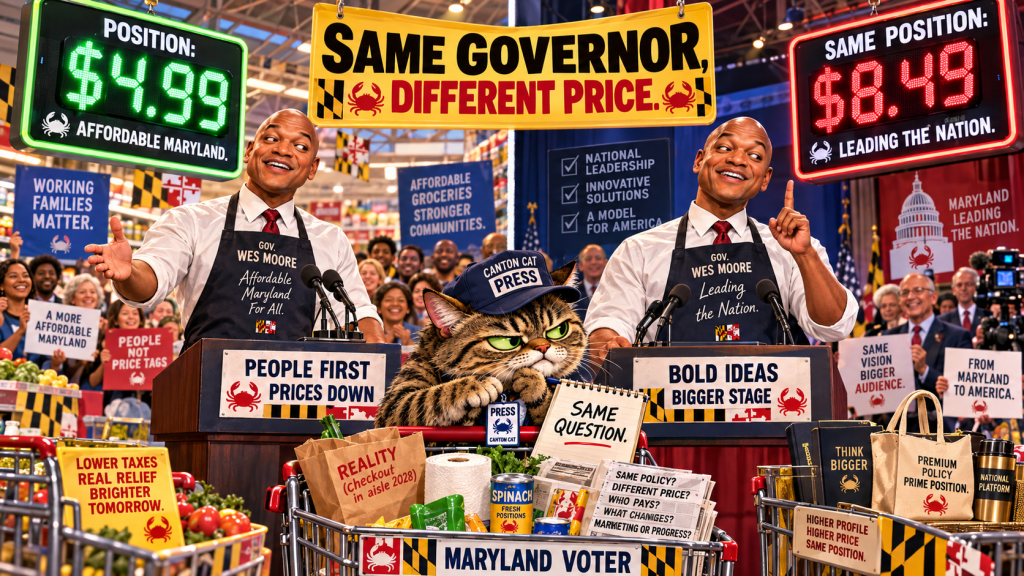
Moore’s ad features two shoppers with the same basket allegedly facing different prices, which his campaign uses to sell the new law.
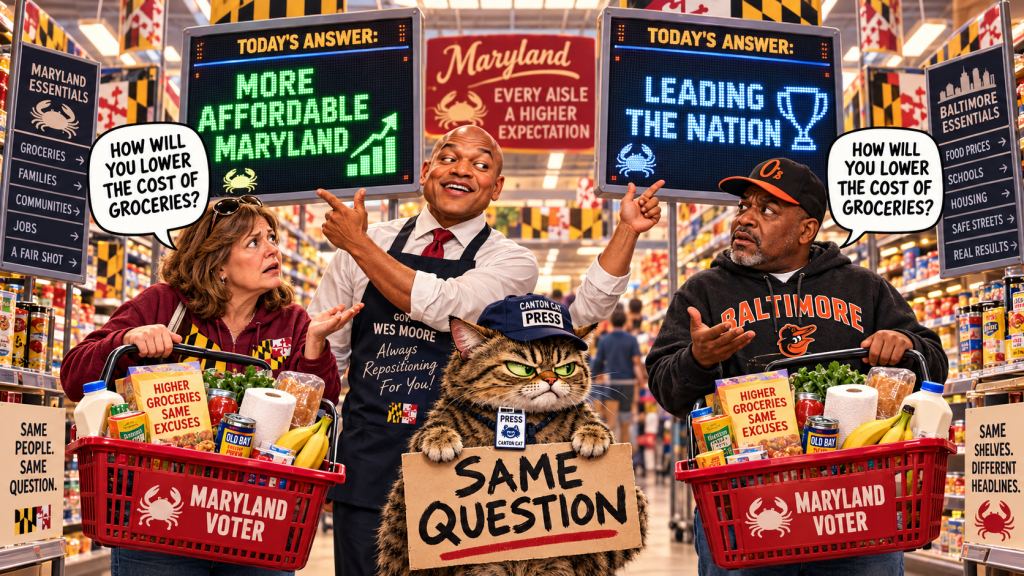
Canton Cat recreated the ad using two Maryland voters.
Voter One: “Governor, are taxes high?”
Moore: “We are building a more affordable Maryland.”
Voter Two: “Governor, are taxes high?”
Moore: “Maryland is leading the nation.”
Canton Cat: “Those were the same question.”
Moore: “Different basket.”
Outstanding.
The administration says grocery stores should not use personal data to manipulate prices.
Fine.
But Annapolis has been using something even more powerful:
political data.
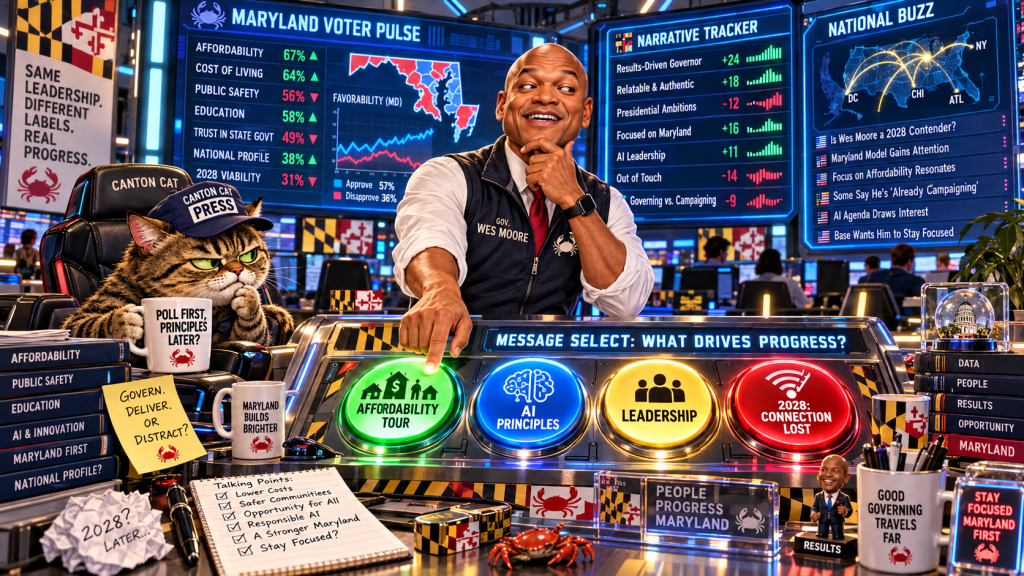
If polling says voters are angry about affordability:
AFFORDABILITY TOUR.
If donors like AI:
AI PRINCIPLES.
If national media calls:
LEADERSHIP.
If somebody asks about 2028:
CONNECTION LOST. PLEASE TRY AGAIN LATER.
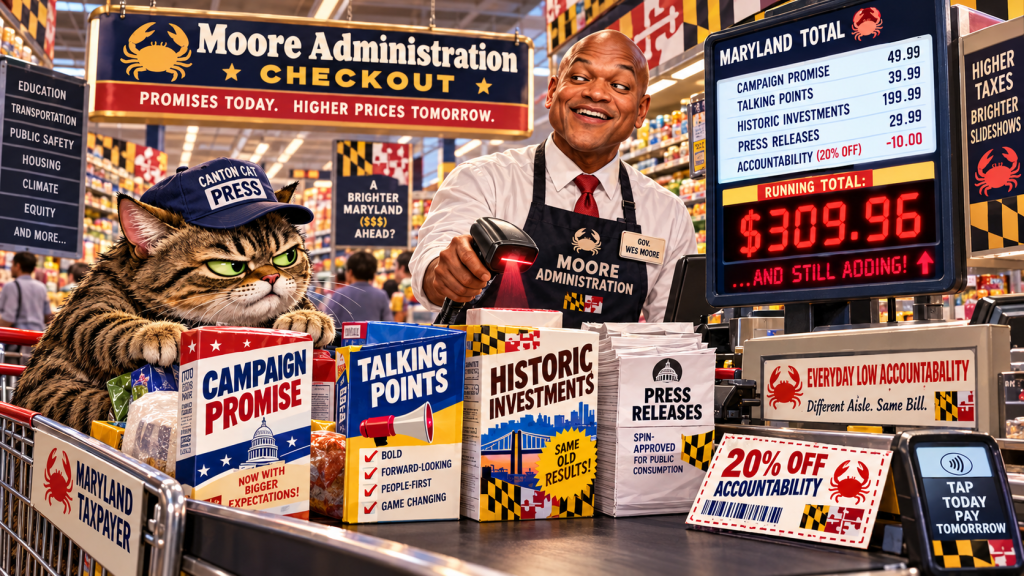
Canton Cat then visited a mock Moore administration checkout lane.
My basket contained:
One campaign promise.
Two talking points.
Three “historic investments.”
Four press releases.
And a coupon reading:
SAVE 20% ON ACCOUNTABILITY — SOME EXCLUSIONS APPLY.
The cashier scanned everything.
Total:
$4.7 billion and somehow still rising.
I objected.
The clerk smiled.
“Sir, that’s dynamic governing.”
Moore has called the grocery-pricing law a first-in-the-nation consumer protection measure.
Canton Cat supports taking the concept further.
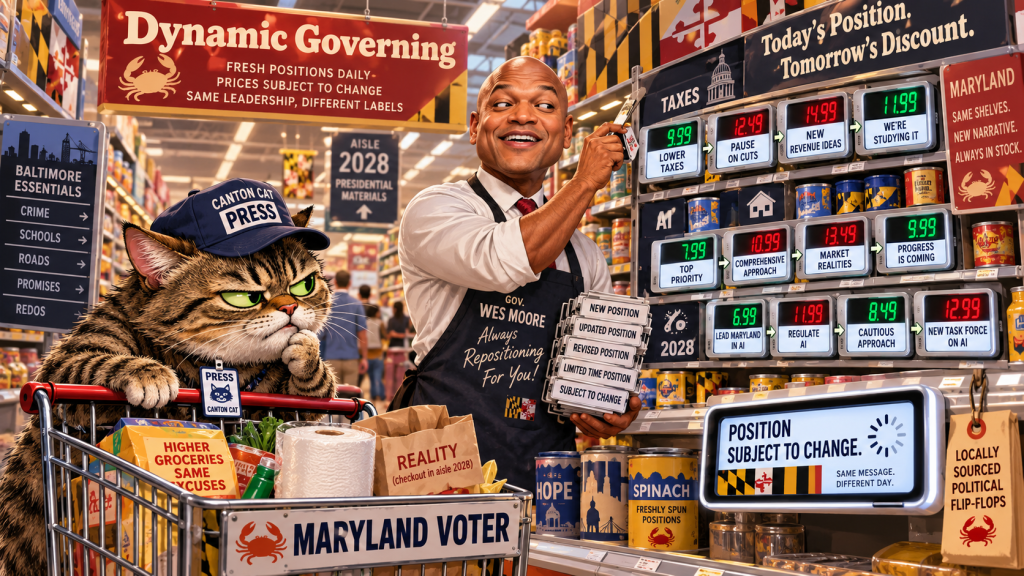
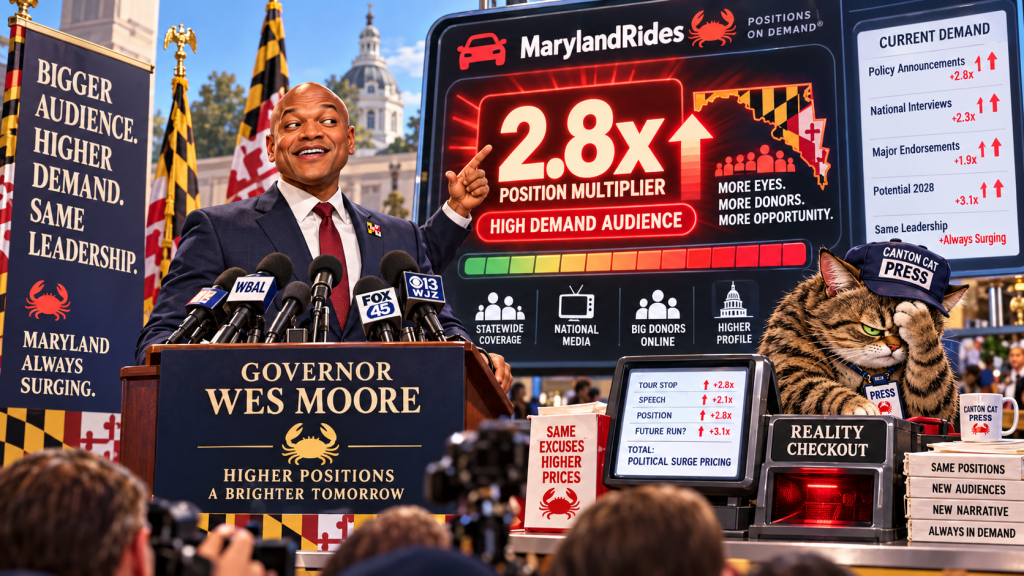
Put digital price tags behind every podium.
When the governor changes position, the display updates automatically:
POSITION ON TAXES: PLEASE WAIT…
POSITION ON AI: PROCESSING…
POSITION ON 2028: ITEM UNAVAILABLE IN YOUR REGION.
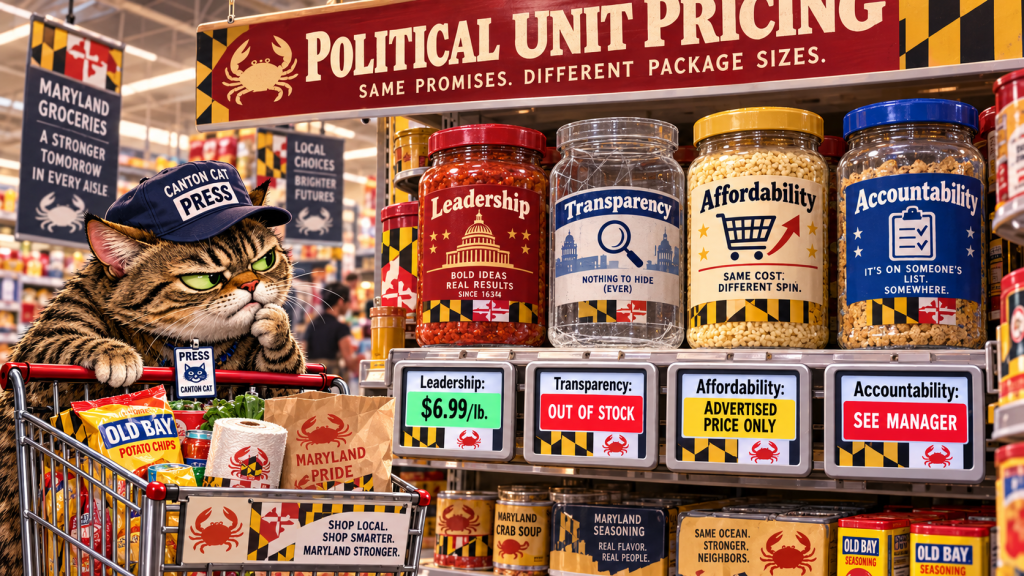
By 2027, Maryland could become the first state where politicians are required to post unit pricing on rhetoric.
Leadership: $6.99/lb.
Transparency: temporarily out of stock.
Affordability: advertised price only.
Accountability: see manager.
Moore says dynamic grocery pricing is unfair because consumers deserve consistency.
Agreed.
Now do government.
Because if two shoppers deserve the same price for eggs, two voters should at least get the same answer from the governor.
Otherwise it’s not leadership.
It’s surge pricing with a flag pin.

