
By Martin O’Meowey | The Canton Cat
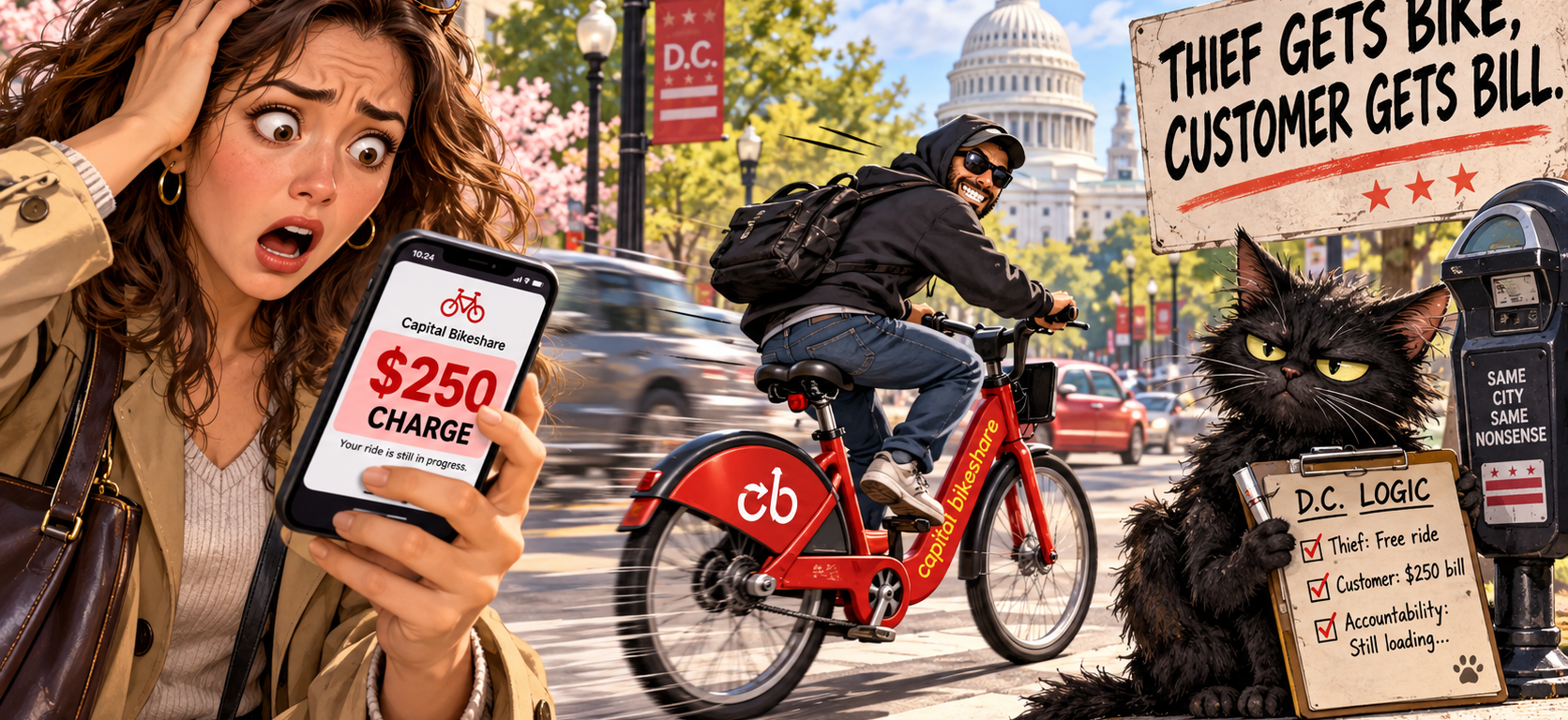
WASHINGTON — A woman says her rented D.C. bike was stolen and she was later hit with a $250 charge, proving the capital has finally perfected its transportation policy:
Criminal takes the bike. Customer gets the bill.
Beautiful system.
No notes.
Emily Miller says she called police after the rental bike was stolen, then found herself dealing with the financial aftermath from the bike-share operator.
Canton Cat reviewed the situation from behind a Metro station trash can.
“So someone steals your bike?”
“Yes.”
“You report it?”
“Yes.”
“And then you get charged?”
“Yes.”
Outstanding.
Washington has invented victim-based revenue collection.
The next phase is obvious.
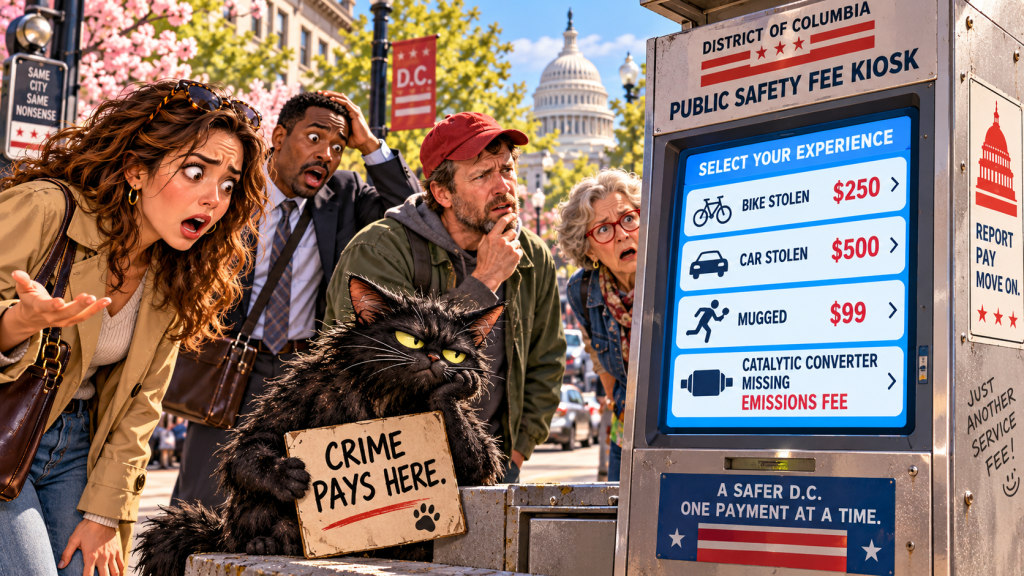
Your car gets stolen?
$500 vehicle abandonment fee.
Someone breaks into your house?
$275 unsecured-property surcharge.
You get mugged?
$99 expedited wallet-replacement processing fee.
Someone steals your catalytic converter?
Congratulations.
You now owe an emissions penalty.
The bike itself was reportedly worth far more than the $250 charge, which raises another important question:
If the thief now possesses the asset, why isn’t he getting the invoice?
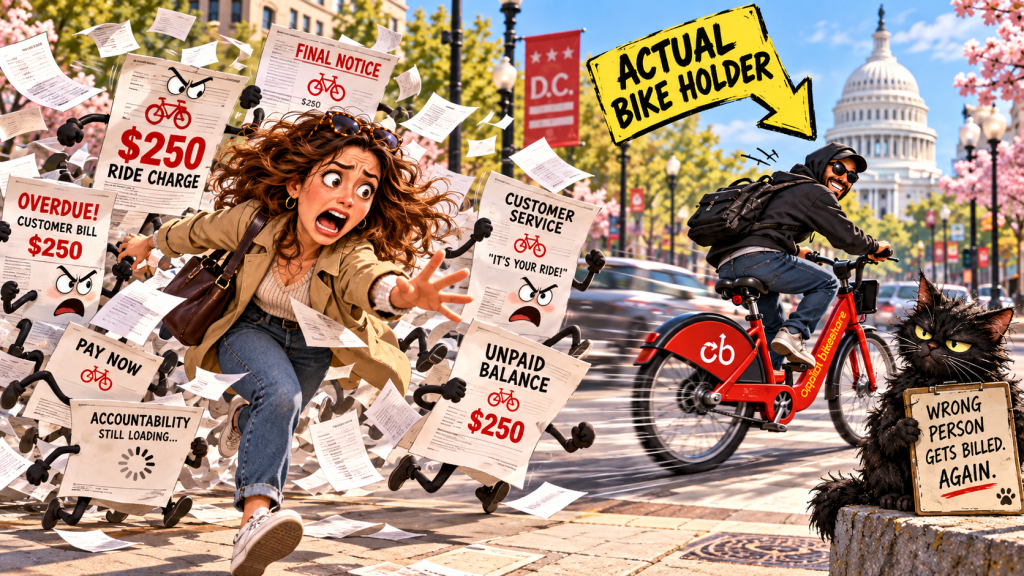
Apparently because the billing department knows where you live.
The suspect?
Less convenient.
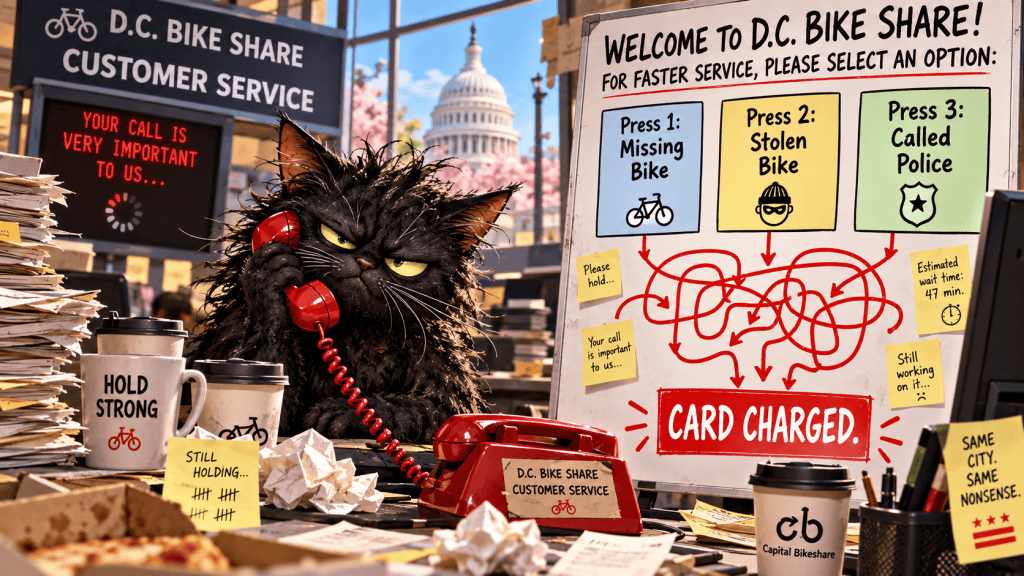
Canton Cat attempted to contact customer service.
“Press 1 if your bike is missing.”
I pressed 1.
“Press 2 if your bike was stolen.”
Pressed 2.
“Press 3 if you called police.”
Pressed 3.
“Thank you. Your card has been charged.”
Efficient.
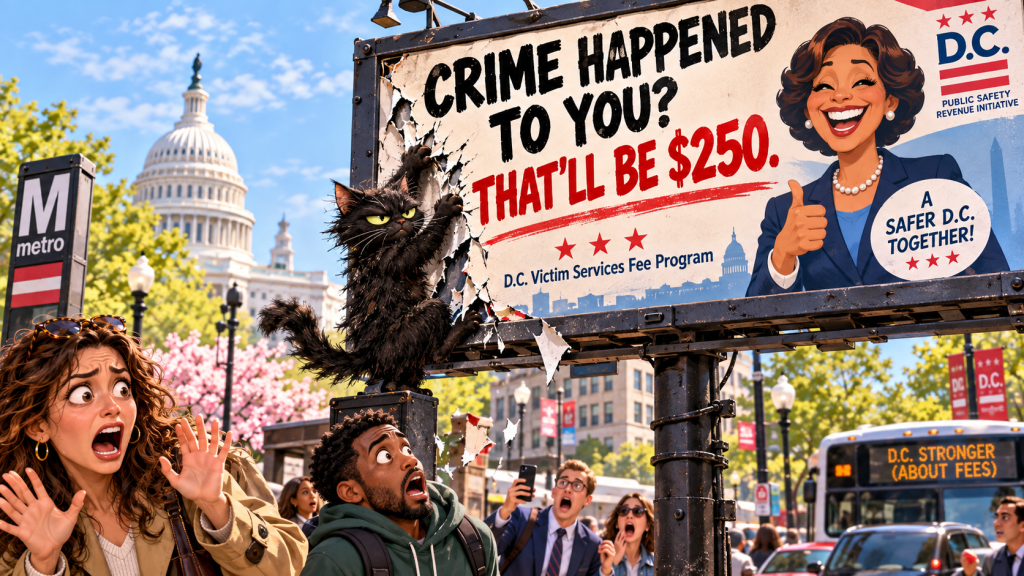
D.C. officials are reportedly considering expanding the model citywide under a new program:
CRIME HAPPENED TO YOU? THAT’LL BE $250.
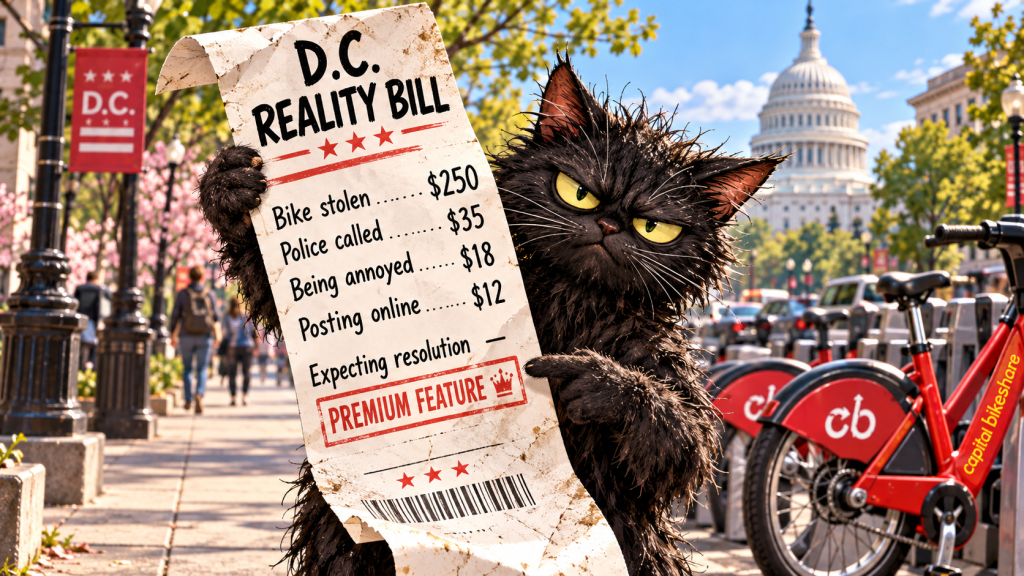
Residents will receive itemized invoices:
Bike stolen: $250
Police called: $35 convenience fee
Being annoyed: $18 emotional infrastructure surcharge
Posting about it online: $12 digital accountability fee
Expecting resolution: premium feature
A spokesman explained that customers are responsible for rented equipment.
Fair enough.
But at some point, “equipment responsibility” starts sounding like:
“You should have fought the thief harder.”
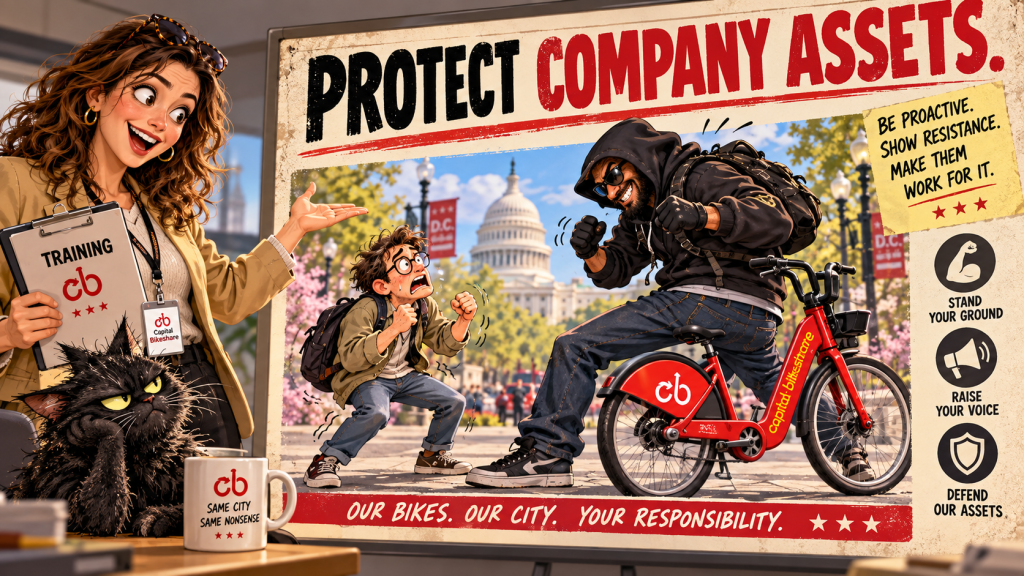
Next summer, every Capital Bikeshare rental may include a complimentary helmet, lock and laminated card reading:
IF ROBBED:
- Remain calm
- Contact police
- Protect your credit card
- Begin mourning the deposit
Canton Cat supports one policy change.
If someone steals a rental bike, the company should transfer the account to the thief automatically.
He wanted the bike.
He gets the subscription.
Charge him monthly.
Send him promotional emails.
Ask him to rate his ride.
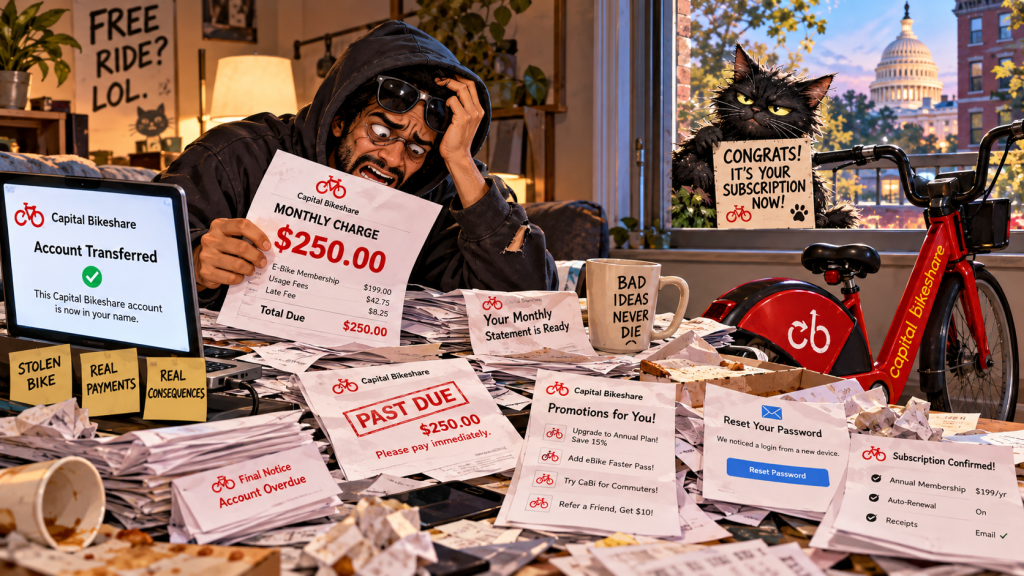
After three months of customer-service notifications, surge fees and password resets, he’ll return the bicycle voluntarily.
That’s not criminal justice.
That’s deterrence.

